
Electrical Glove Classes Explained: Class 00 to Class 4
Rubber insulating gloves are the last barrier between a worker's hands and an energized conductor. Picking the wrong class, skipping the daily air test or missing a retest date can turn a routine job into a fatal one. This guide covers how glove classes work, what OSHA requires for inspection and testing, and how to keep a glove program on schedule.
What the Glove Class Means
Rubber insulating gloves are manufactured to ASTM D120 and rated in six classes. OSHA's electrical protective equipment standard, 29 CFR 1910.137, sets the maximum use voltage for each class in Table I-4:
| Class | Maximum use voltage (AC rms) |
|---|---|
| Class 00 | 500 V |
| Class 0 | 1,000 V |
| Class 1 | 7,500 V |
| Class 2 | 17,000 V |
| Class 3 | 26,500 V |
| Class 4 | 36,000 V |
The maximum use voltage is the highest voltage of the energized system a glove may be used on. Choose a class whose maximum use voltage is at or above the voltage the worker will be exposed to. Your electrical safety program and qualified person should determine that exposure voltage.
Which Class Fits the Work?
Going by the voltages in Table I-4, Class 00 and Class 0 gloves cover work at 1,000 volts and below, which includes most industrial panels, motor control centers and building electrical systems. Classes 1 through 4 cover medium- and high-voltage work, typically done by utilities and line contractors on distribution systems.
Inspect and Air-Test Before Every Use
Under 1910.137, insulating equipment must be inspected for damage before each day's use and immediately after any incident that could reasonably have damaged it. Insulating gloves must also be air-tested as part of that inspection.
During the inspection, look for cuts, punctures, embedded objects, ozone cracking and any swelling, softening, hardening or stickiness. A glove that fails inspection should be removed from service right away.
Retest Every 6 Months
Table I-5 of 1910.137 requires rubber insulating gloves to be electrically tested:
- Before first issue and every 6 months after that
- Whenever there's an indication that the insulating value is suspect
- After repair
- After use without protectors
Gloves that were tested but sat in storage can't be placed into service unless they've been electrically tested within the previous 12 months. In-service care and retesting follow ASTM F496.
Wear Leather Protectors
Leather protectors go over rubber insulating gloves to guard against cuts, punctures and abrasion. Because Table I-5 requires a retest after any use without protectors, skipping them can cost you an extra test cycle and pull gloves out of service early. Match protectors to the glove's size and cuff length.
Sizes, Lengths and Cuff Styles
Rubber insulating gloves come in lengths from about 11" to 18" and with straight, bell, contour or rolled cuffs. Longer gloves add forearm coverage. Bell and contour cuffs make room for a sleeve or a heavier jacket.
Keep Your Glove Program on Schedule
Many programs give each worker at least two pairs, so one pair is in service while the other is being tested. Track each glove's serial number and test date so nothing slips past the 6-month mark.
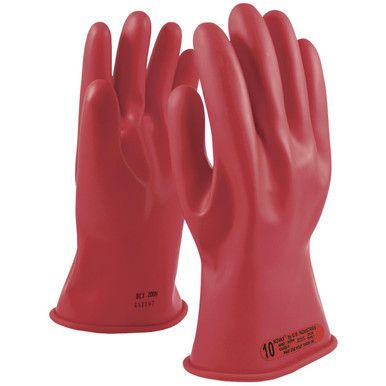
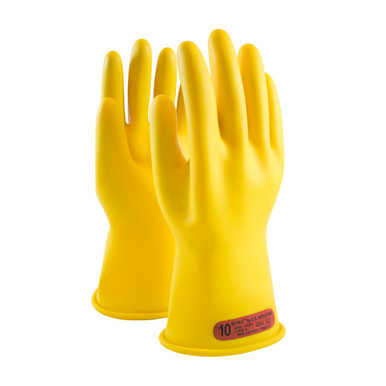
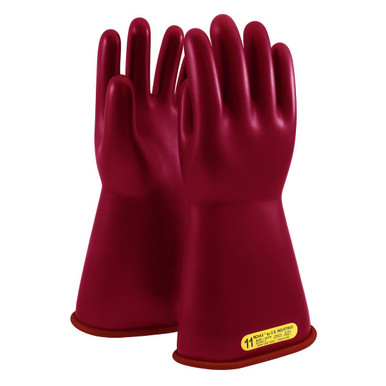
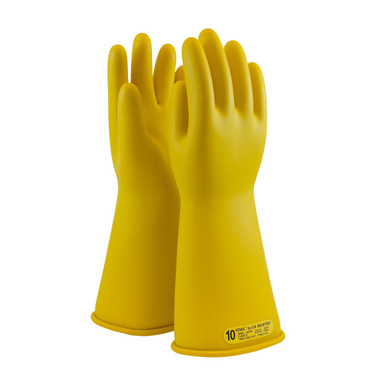
Some crews also rotate glove colors by test cycle, issuing a different color each 6-month period. That makes it easy to see at a glance which gloves are freshly tested and ready to use and which are due for service. For example, our Class 0 11" straight-cuff gloves come in red and yellow, and our Class 2 14" gloves in red and yellow. Color coding is a visual aid only. The test date stamped on each glove and your test records are what show it's in date, so check the stamp before every use.
Why Work With a Local Safety Partner
Online-only suppliers can ship you a pair of gloves. They can't test them, track their retest dates or help your crew build a testing routine. Safety Services, Inc. sells the gloves, tests them in-house at our Grand Rapids, Michigan facility and keeps the test records, so your whole glove program runs through one partner.
- In-house dielectric glove testing in Grand Rapids, MI
- Pickup options or prepaid shipping kits to keep gloves moving through the 6-month cycle
- Help choosing the right class, size and cuff from the team that tests these gloves: call 800.632.2955
Safety Services, Inc. tests Class 00–4 rubber insulating gloves under OSHA 1910.137 and ASTM D120/F496. Each glove is cleaned, inspected, air-tested, electrically proof-tested to its class rating, date-stamped and certified. Schedule dielectric glove testing or shop electrical gloves and leather protectors.
------------------------------------------------------------------------------------------------------------------------
Join our Save-ty Club for exclusive deals and safety news. Sign up here.
Share this article on social media and tag us for a special discount on your next purchase.
Let's spread the word on staying safe!
Disclaimer: The content provided on this website is for informational purposes only and is not intended to be a substitute for professional medical advice, diagnosis, or treatment. Always seek the advice of your physician or other qualified health provider with any questions you may have regarding a medical condition.
The information on this site should not be construed as establishing any safety standard or as providing directives for compliance with the Occupational Safety and Health Administration (OSHA) or any other health and safety regulatory agencies. Reliance on any information provided by this website is solely at your own risk. We do not accept any responsibility for any loss which may arise from reliance on information contained on this site.
Safety Services, Inc. | Kalamazoo & Grand Rapids, MI 800.632.2955 | customercare@safetyservicesinc.com Safety Simplified.