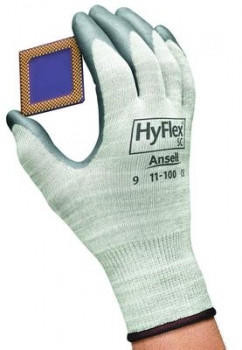
This product is rated ANSI A1 for cut resistance under ANSI/ISEA 105-2016 (highlighted below).
ANSIA1CUT
200–499 grams to cut
Nuisance cut hazards- Small parts assembly
- Electronics assembly
- Quality inspection
ANSIA2CUT
500–999 grams to cut
ANSIA3CUT
1,000–1,499 grams to cut
Low cut hazards- Warehousing
- Light material handling
- General labor
ANSIA4CUT
1,500–2,199 grams to cut
Moderate cut hazards- Light metal stamping
- Sheet metal handling
- Construction framing
ANSIA5CUT
2,200–2,999 grams to cut
ANSIA6CUT
3,000–3,999 grams to cut
High cut hazards- Metal stamping
- Recycling and waste sorting
- Oil and gas refining and extraction
ANSIA7CUT
4,000–4,999 grams to cut
ANSIA8CUT
5,000–5,999 grams to cut
ANSIA9CUT
6,000+ grams to cut
Extreme cut hazards- Meat processing
- Glass manufacturing and installation
- Heavy metal stamping
Abrasion and puncture
ANSI1ABR
100–499 cycles (500 g load)
ANSI2ABR
500–999 cycles (500 g load)
ANSI3ABR
1,000–2,999 cycles (500 g load)
ANSI4ABR
3,000–9,999 cycles (2,500 g load)
ANSI5ABR
10,000–19,999 cycles (2,500 g load)
ANSI6ABR
20,000+ cycles (2,500 g load)
ANSI1PUN
10–19 newtons
ANSI2PUN
20–59 newtons
ANSI3PUN
60–99 newtons
Puncture 1–3- Light to moderate hazards
ANSI4PUN
100–149 newtons
ANSI5PUN
150+ newtons
Puncture 4–5- Industrial and high-risk puncture hazards
Abrasion is cycles of abrasive rubbing before the material wears through; puncture is the force a standard probe needs to push through. The puncture test uses a probe, not a needle, so it doesn't rate needlestick protection. If no level is highlighted, the manufacturer hasn't published one for this product.
Shop cut-resistant gloves by level · The Ultimate Guide to ANSI Cut Levels · Puncture-resistant gloves